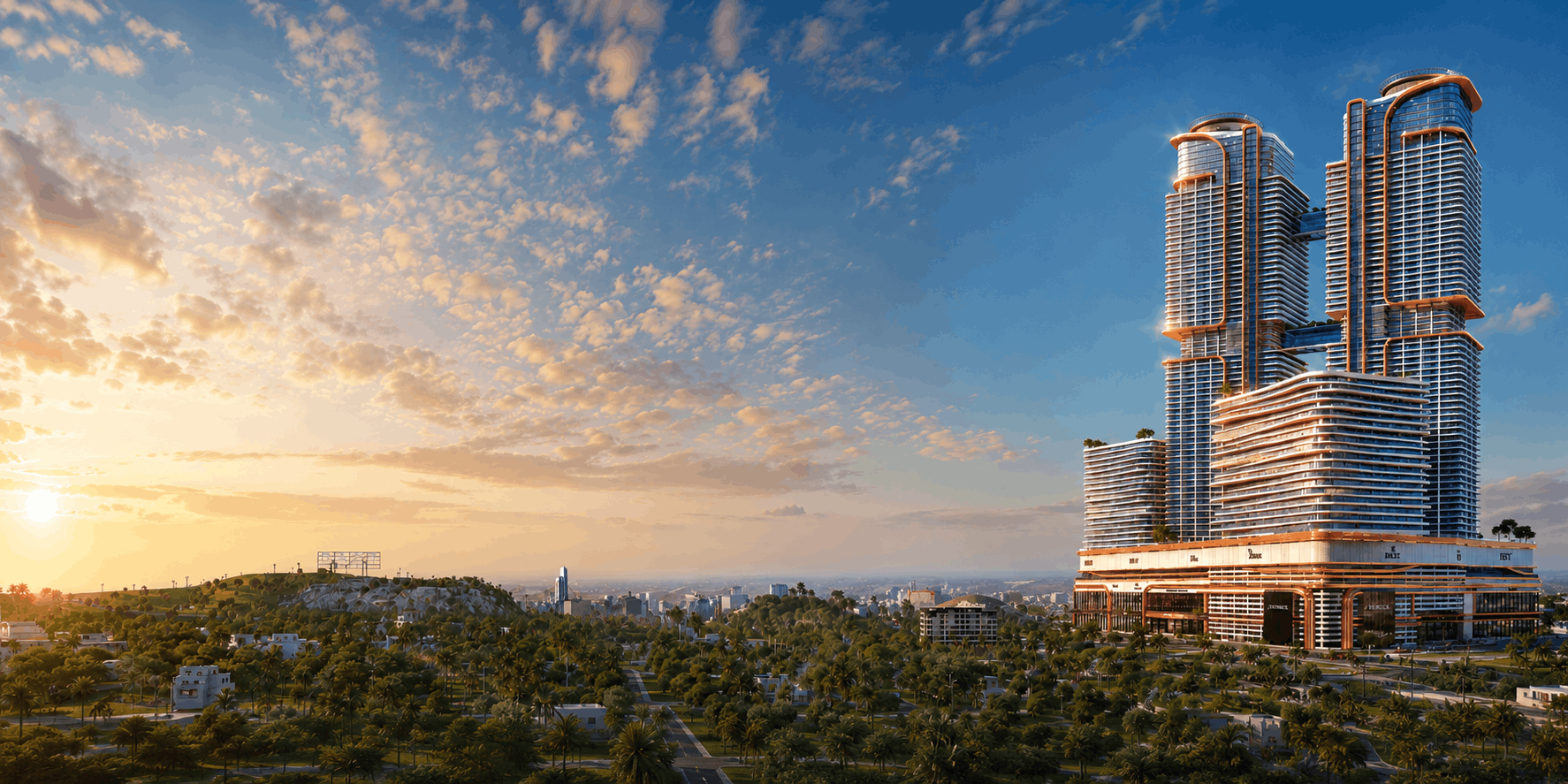
Burj Quaid Pakistan is an 82-storey, 941-foot mixed-use skyscraper developed by ABS Developers in DHA City Karachi. It combines ultra-luxury residences, corporate offices, retail boutiques, and a 5-star hotel in a 100% Shariah-compliant development with a 15% down payment and 6-year installment plan.
Every major global city has a defining moment, a single structure that signals to the world that the rules have changed. For Karachi, that moment is here.
Burj Quaid Pakistan is set to rise 941 feet above the city’s skyline, developed by ABS Developers as the country’s tallest building. At 82 storeys, this isn’t just a tall building. It’s a vertical city that packages luxury living, corporate workspaces, high-end retail, and hospitality under one roof. And investors paying close attention to South Asia’s property markets, the timing matters.
The Vision Behind the Monument
The project carries a name rooted in national identity. Burj Quaid is a direct tribute to Quaid-e-Azam Muhammad Ali Jinnah, the founding father of Pakistan, a deliberate choice that anchors this development in something far larger than commercial ambition.
The building’s design reflects that vision. The 82-storey twin-tower structure integrates:
- Ultra-luxury residential apartments across multiple floors
- Grade-A corporate offices designed for national and multinational tenants
- High-end retail boutiques catering to premium shoppers
- A world-class 5-star hotel serving business and leisure travelers
This mixed-use model isn’t experimental. It’s the same formula that turned isolated plots into thriving urban ecosystems across the Gulf. The difference here? Karachi’s luxury real estate market is still in its early innings, which means the upside for early investors is considerably larger.
Taking a Page from the Dubai Real Estate Playbook
Look at how Downtown Dubai and Dubai Marina were built. High-net-worth individuals and overseas investors didn’t just want homes they wanted an integrated lifestyle. Live, work, shop, and unwind without leaving the block. That concept drove billions in capital into the UAE’s real estate market and continues to sustain premium rental yields year after year.
Burj Quaid Pakistan applies that same logic to Karachi. The city has long-standing demand for premium vertical living, but supply has historically failed to meet the standard that serious investors expect. ABS Developers addresses that gap directly.
The off-plan investment structure makes entry accessible without compromising on upside. Buyers can secure a unit with a 15% down payment, followed by a 6-year installment plan. In mature markets like Dubai, pre-handover appreciation on landmark mixed-use towers has historically outperformed ready properties. Karachi’s emerging market status amplifies that potential further capital appreciation in high-demand, supply-constrained luxury segments tends to be sharper and faster when the market is earlier in its growth cycle.
Location and Strategic Connectivity
Location is the variable that separates a good investment from a great one. Burj Quaid Pakistan sits inside DHA City Karachi one of the city’s most planned and prestigious urban corridors.
What makes this placement strategic isn’t just the address. It’s the infrastructure surrounding it. The upcoming Malir Expressway will directly connect DHA City Karachi to the commercial core of the metropolis, cutting through the city’s notoriously congested road network.
Key travel times from the project site:
- Clifton: 25 minutes
- Jinnah International Airport: 25 minutes
- Shahra-e-Faisal: 25 minutes
Internal infrastructure is equally serious. The development features a 22-lane grand entrance and 10-lane internal roads—an urban planning standard that eliminates the bottlenecks that typically plague high-density developments.
For overseas Pakistanis evaluating long-term rental yield and capital appreciation, connectivity directly influences both. Tenants residential and corporate pay premiums for time saved. That premium flows back to property owners.
A True Architectural Marvel
The twin-tower design reaching 941 feet makes Burj Quaid Pakistan the tallest building in Pakistan upon completion. Structurally, that’s a record. From an investment-risk perspective, the regulatory approvals backing it are equally significant.
The project holds full approvals from:
- CAA (Civil Aviation Authority)
- PAA (Pakistan Airports Authority)
- DHA (Defence Housing Authority)
For institutional investors and overseas buyers, regulatory compliance isn’t a formality, it’s a risk-mitigation checkpoint. Projects that carry full legal clearance from multiple government bodies remove the most common sources of investor anxiety in Pakistan’s real estate sector. The foundations here, both literal and legal, are solid.
World-Class Amenities and Smart Living
Buying a unit in Burj Quaid Pakistan means accessing over 100 curated amenities, a lifestyle ecosystem that rivals off-plan premium developments currently launching across the Gulf.
Key features include:
- Double-height entrance lobby with an exclusive executive lounge
- Private pools in select residential units
- Tennis courts, a library, and dedicated recreational spaces
- 24/7 room service and concierge-level support
- High-speed, smart-destination elevators for seamless vertical mobility
- Solar parks and dedicated power plants for uninterrupted energy supply
- Modern sewerage systems and green infrastructure
Smart home automation runs throughout the building, integrating lighting, climate, and security controls in a way that aligns with what premium buyers in Karachi are now actively seeking. This is the type of specification that drives rental demand from corporate tenants and high-income residents alike—the kind of demand that sustains yield over the long term.
Data-Driven Investment Potential
Numbers tell a clearer story than promises. Here’s how the Karachi high-rise model compares to the Dubai benchmark that investors already understand:
| Metric | Dubai High-Rise Market | Karachi High-Rise Model |
| Primary Appeal | Tourism, tax-free yields | Untapped luxury demand, overseas expat capital |
| Development Strategy | Vertical cities (mixed-use) | Vertical cities (mixed-use) |
| Payment Flexibility | 50/50 or post-handover plans | 6-year plan, 15% down payment |
| Capital Appreciation | Steady (mature market) | High (emerging market premium) |
The strategic takeaway is straightforward. Dubai’s market rewards consistent, moderate returns because it’s fully priced in. Karachi’s luxury segment is earlier in its cycle, meaning the capital appreciation curve is steeper for those who enter now rather than after the market matures.
Overseas Pakistanis are well-positioned here. The combination of favorable exchange rates, a familiar legal environment, and an ethical financing structure reduces the friction that typically keeps expat capital in Gulf markets rather than flowing back home.
100% Shariah-Compliant Real Estate
ABS Developers operates as a 100% Shariah-compliant real estate company. That distinction carries real weight for a significant segment of Pakistani investors—both domestically and in the diaspora.
Conventional property financing often embeds interest clauses and ambiguous fee structures that conflict with Islamic finance principles. ABS Developers eliminates that concern entirely. The zero-interest model isn’t just an ethical positioning choice—it’s a trust-building mechanism that expands the investor base and signals long-term market credibility.
For overseas Pakistanis evaluating ethical investment avenues outside of Gulf markets, this structure provides a clear, values-aligned path back into the domestic real estate sector.
Karachi’s Landmark to Watch in 2026 and Beyond
Burj Quaid Pakistan represents a deliberate, data-backed argument that Karachi can compete for the same tier of premium capital that has historically bypassed Pakistan in favor of more established Gulf markets.
The 941-foot tower combines strong fundamentals: regulatory approval, infrastructure-linked location, flexible payment terms, Shariah-compliant financing, and an amenity package that meets global luxury standards. For investors building or repositioning real estate portfolios in South Asia, this is the project that warrants serious attention in 2026 and the years that follow.
The window for pre-handover pricing is finite. Early positioning in landmark mixed-use towers as Dubai’s market demonstrated over two decades tends to produce the strongest long-term returns. For more data-driven real estate analysis and economic updates, keep following On Record Pakistan.
Frequently Asked Questions
How tall is Burj Quaid Pakistan?
The building is designed to reach 941 feet across 82 storeys, making it the tallest building in Pakistan upon completion.
Where is Burj Quaid Pakistan located?
The project is situated in DHA City Karachi, with direct access to the upcoming Malir Expressway, placing it within 25 minutes of Clifton, Jinnah International Airport, and Shahra-e-Faisal.
What is the payment plan for Burj Quaid Pakistan?
Buyers can enter with a 15% down payment, followed by a flexible 6-year installment plan. This structure is designed to make premium off-plan investment accessible to both local buyers and overseas Pakistanis.
Who is developing Burj Quaid Pakistan?
The project is being developed by ABS Developers, a fully Shariah-compliant real estate company with a zero-interest financing model recognized for building investor trust among both domestic and overseas Pakistani buyers.