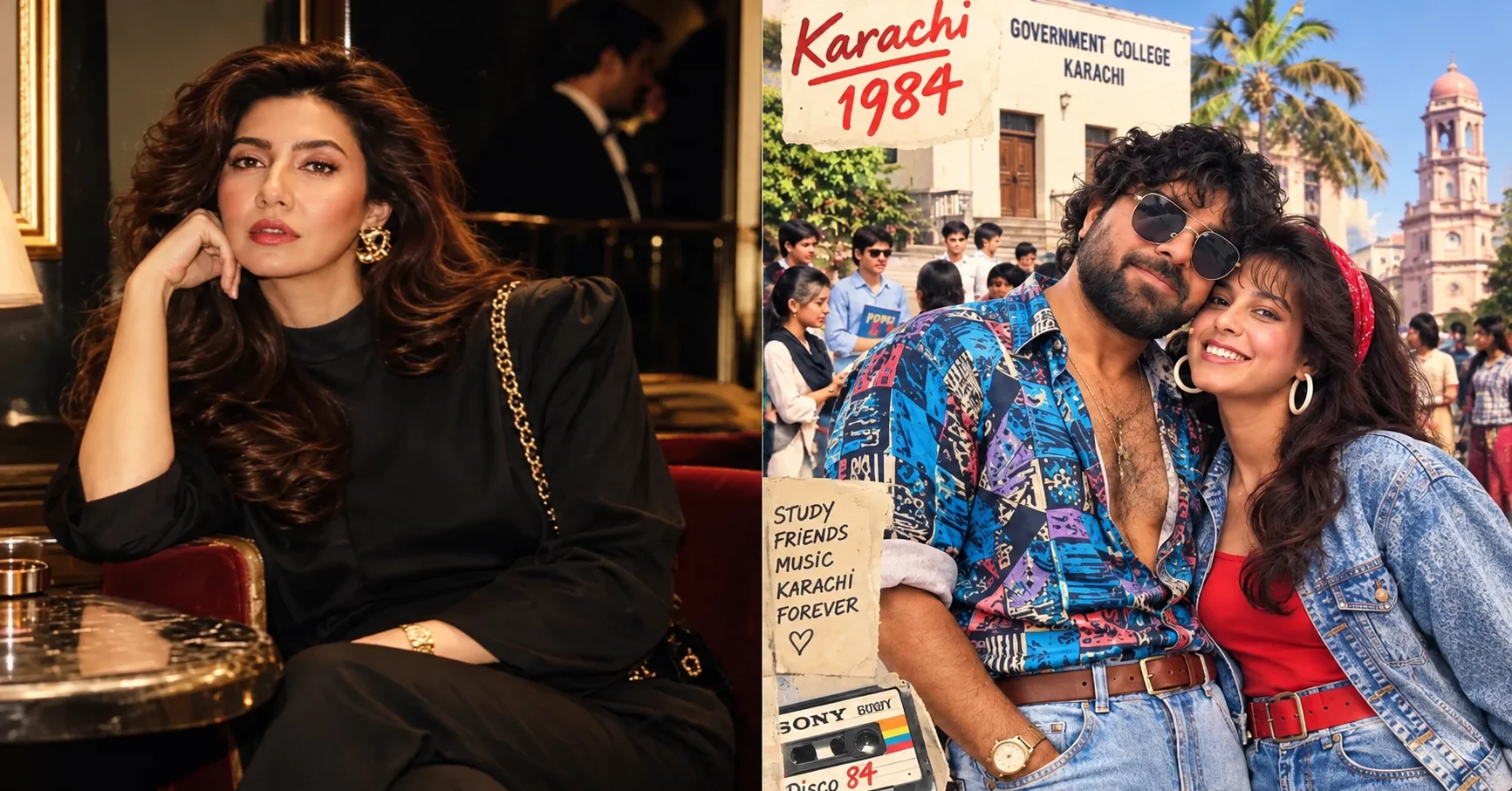
Social media in Pakistan is having a moment. This week, a new AI trend took over Instagram. People are turning old photos into 80s-style portraits using AI tools. And it’s not just regular users. Many famous Pakistani celebrities have joined in too.
The trend looks fun on the surface. But it has also started a serious conversation. Fans and digital rights activists are now asking a hard question. Is it safe to upload your face to AI apps just for a trend?
What Is the AI 80s Trend?
The trend is simple to understand. A person uploads a clear photo of themselves to an AI tool, usually ChatGPT. Then they ask the AI to show how they would have looked in the 1980s.
The AI creates a new image. It keeps the person’s face but changes everything else. Big hair. Bold makeup. Bright clothes. Glitter. Retro backgrounds. The 80s were known for loud fashion, and the AI captures that style well.
Within days, the trend spread across the world. It reached Bollywood stars like Kiara Advani, Sidharth Malhotra, and Parineeti Chopra. Then it reached Pakistan.
Which Pakistani Celebrities Joined the Trend?
A long list of well-known names took part. Actors Saboor Aly and Yasir Hussain shared their own AI-generated 80s photos on Instagram. Their posts got a lot of attention, and also some criticism.
The entertainment page Mashion was one of the first to jump in. It shared AI images of top actresses including Mahira Khan, Mawra Hocane, Ayeza Khan, Anmol Baloch, Sanam Saeed, Aina Asif, and Zara Noor Abbas. The caption playfully said these stars looked like they were “built for” the 80s era.
Many other celebrities followed. This includes Shahroz Sabzwari, Mariyam Nafees, Anoushey Ashraf, Zhalay Sarhadi, Noor Hassan, Nimra Khan, Armeena Khan, Muniba Mazari, Sunita Marshall, Dua Malik, and Hajra Yamin. TV personalities like Madeha Naqvi, Qudsia Ali, and Annie Jafri also shared their retro AI looks.
Not everyone used AI, though. Musician Bilal Maqsood from the band Strings took a different route. He shared a real throwback photo from the band’s early days instead of an AI-made one.
Why Are Fans Worried?
This is where the story gets serious. As more people shared their AI photos, some fans and experts started raising red flags online.
The main worry is about deepfakes. A deepfake is a fake image or video made with AI. It can look very real, even though it is not. Experts say that every time someone uploads a clear face photo to an AI app, they are helping that AI learn more about human faces. Over time, this data can make it easier for bad actors to create fake images of real people.
Digital rights activist Usama Khilji spoke out about this on social media. He warned people against blindly trusting AI apps with their photos. His message was direct. He said people should stop feeding their faces to big tech companies without thinking about the risks first.
This is not a small concern. Deepfake cases have already caused real harm elsewhere. In India, courts have dealt with deepfake cases involving actors like Preity Zinta, showing that this issue is not just theoretical. If you want to learn more about how deepfake technology works, Britannica has a clear explainer on the topic.
The Bigger Privacy Question
This trend has opened up a wider talk about data privacy. When you upload a photo to an AI chatbot, where does that photo go? Who can see it? How long is it stored? Most regular users don’t know the full answer.
AI companies usually have privacy policies that explain how they use uploaded data. But these policies are often long and hard to read. Many people skip reading them entirely. This is part of the problem experts are pointing to.
Digital safety groups suggest that people should be more careful before sharing their face with any app, even for something that seems easy and harmless like a fashion trend. The Electronic Frontier Foundation also publishes regular guides on staying safe while using AI tools, which can be a simple starting point for anyone curious about digital privacy.
Is the Trend All Bad?
Not really. Most people who joined the trend did it just for fun. They wanted to see a playful, nostalgic version of themselves. There was no bad intent behind it. The 1980s are remembered as a colorful and expressive era in fashion, and recreating that look feels like harmless entertainment for many.
The problem is not the trend itself. The problem is what could happen with the data later. Fans are not saying people should stop using AI apps forever. They are asking for more awareness. A simple rule that experts often repeat is this: think before you upload.
What Should Users Keep in Mind?
Here are a few simple points people are sharing online after this trend went viral:
- Read the privacy policy of any AI app before uploading personal photos.
- Avoid using random or unknown apps that ask for face scans.
- Be careful with photos of children, since they cannot give consent.
- Remember that once a photo is online, it is hard to fully remove it.
None of this means AI trends are dangerous by default. It simply means users should stay alert. A little bit of caution can make these trends safe to enjoy.
Final Thoughts
The AI 80s trend has clearly become one of the biggest social media moments in Pakistan this month. From top actors to television hosts, everyone wanted to try it. It brought nostalgia, fashion, and a lot of likes and comments.
But it also brought an important reminder. AI tools are powerful, and they are growing fast. What feels like a simple, easy trend today could raise bigger privacy questions tomorrow. As AI becomes part of daily life, both celebrities and fans will likely keep having this conversation for a long time.
Frequently Asked Questions
1. What is the AI 80s trend on Instagram?
It’s a viral trend where people upload their photo to an AI tool like ChatGPT. The AI then generates an image showing how they might have looked in the 1980s, with retro hair, makeup, and fashion.
2. Which Pakistani celebrities joined the AI 80s trend?
Many stars took part, including Saboor Aly, Yasir Hussain, Mahira Khan, Ayeza Khan, Sanam Saeed, Muniba Mazari, and several others across film and TV.
3. Why are people worried about deepfakes because of this trend?
Uploading face photos to AI apps can help train AI models on human faces. Experts warn this data could later be misused to create fake images or videos of real people.
4. Is it safe to use AI trend filters like this one?
It can be safe if used carefully. Experts suggest checking the app’s privacy policy, avoiding unknown apps, and thinking twice before sharing personal photos online.