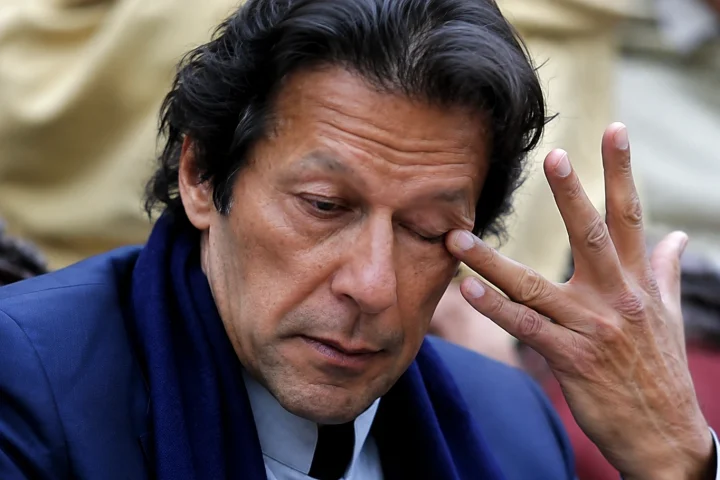
Pakistan’s top court is once again in the news. This time, it is about former Prime Minister Imran Khan and his health. The Supreme Court (SC) has returned a review plea filed by the federal government. This plea wanted to stop Imran Khan’s move to Shifa International Hospital in Islamabad. The court said the plea had some paperwork problems. So, it sent the plea back to the government. This story has many small details. We will explain them here in plain and simple words, so that any reader can follow along without any trouble.
What Actually Happened
On August 18, the Supreme Court gave an order. It told jail officials to move Imran Khan from Adiala Jail to Shifa International Hospital. The reason was medical care. The court gave a two-day deadline for this move. Justice Shahid Waheed also named two doctors, Dr Faisal Sultan and Dr Uzma Khan, to be with Imran Khan at the hospital.
The federal government was not happy with this order. A day later, on August 19, the government filed a review petition. This petition was filed by the Islamabad chief commissioner. It went through the advocate general for the Islamabad Capital Territory. The goal was to get the court to change or cancel its own order.
Now, on August 20, the Supreme Court’s Registrar Office has returned this review plea. This is not a rejection on merit. It is a technical step. The Registrar’s Office found that the paper books attached to the plea were not complete. In court language, “paper books” means the full set of documents that must go along with a petition. Since some papers were missing, the office sent the plea back instead of placing it before the judges.
Why the Government Wanted a Review
The government’s plea gave several reasons for asking a review. Let’s go through them in an easy way.
1. Jurisdiction issue: The government said the SC’s original order went beyond what the court had the power to decide at that stage. It called the order more like a final decision than a simple, temporary one.
2. No notice given: The plea claimed that some parties, including the Islamabad chief commissioner, were not formally told about the case before the order was made. This, the government argued, was unfair.
3. Prison Rules concern: The petition pointed to Rule 197 of the Pakistan Prison Rules, 1978. This rule explains how and when a prisoner can be shifted to a hospital. The government said this rule was not fully considered by the court.
4. Equal treatment argument: The plea also mentioned Article 25 of the Constitution. This article is about equal treatment under the law. The government argued that sending Imran Khan to a private hospital, while other prisoners go to government hospitals, was not fair to everyone else.
5. Preference for a public hospital: Law Minister Azam Nazeer Tarar had earlier said the government wanted Imran Khan treated at a state-run hospital, not a private one like Shifa International.
The Background of the Case
To understand this news better, a bit of history helps. Imran Khan was sentenced to three years in prison by an Additional Sessions Judge on August 5, 2023. He challenged this sentence in the Islamabad High Court (IHC). During those proceedings, his legal team asked for permission to shift him to Shifa International Hospital for treatment. This request was filed under Section 561-A of the Code of Criminal Procedure.
The Islamabad High Court rejected this request on March 12. After that rejection, an appeal was taken to the Supreme Court. It was this appeal that led to the SC’s August 18 order directing the transfer to Shifa Hospital.
Imran Khan has been in jail since August 2023. He and his party, Pakistan Tehreek-e-Insaf (PTI), have described the many cases against him as politically driven. Since his removal from the prime minister’s office in April 2022, he has faced a long list of legal cases.
What Happens Next
Because the plea was returned on a technical ground, this is not the end of the road for the government. Sources say the government plans to fix the missing paperwork and file the review plea again. Once the paper books are complete, the plea can be placed before the Supreme Court bench for a proper hearing.
Meanwhile, PTI leaders have reacted strongly. PTI Secretary General Salman Akram Raja posted on social media platform X, saying the government had, in effect, withdrawn its review petition. He said there was no reason for the authorities to delay following the Supreme Court’s August 18 order.
For now, the core question stands unanswered: will Imran Khan be moved to Shifa International Hospital, or will the government succeed in getting the order changed? The coming days should bring more clarity, especially once the review plea is refiled in a simple, complete form that meets the Registrar Office’s requirements.
Why This Story Matters
This case is about more than one person’s hospital transfer. It touches on how much power the Supreme Court has to issue quick, interim orders. It also touches on prison rules, patient rights, and how the law treats different prisoners. Legal experts and citizens alike are watching this case closely, since its outcome could shape how future cases about prisoner health are handled.
For readers who want a simple takeaway: a technical objection, not a final court decision, is what paused the government’s plea. The real legal battle over Imran Khan’s hospital transfer is still ahead.
You can read more about Pakistan’s judicial process on the Supreme Court of Pakistan’s official website and learn more general background on Imran Khan’s political and legal history here. For a general explainer on how court review petitions work, this legal glossary is also a useful, easy reference.
FAQs
1. What did the Supreme Court decide about the government’s plea?
The Supreme Court’s Registrar Office returned the plea due to missing paperwork. It did not reject the plea on its actual arguments.
2. Why did the government file a review petition?
The government felt the SC’s order to move Imran Khan to Shifa Hospital went beyond its power and skipped some legal rules.
3. Will Imran Khan still be shifted to Shifa Hospital?
That depends on the refiled review plea. Until the Supreme Court hears it again, the original order technically stands.
4. What is a “paper book” in court cases?
It’s the full, simple set of documents required with a petition. Missing pages or files can cause a plea to be returned, as seen here.