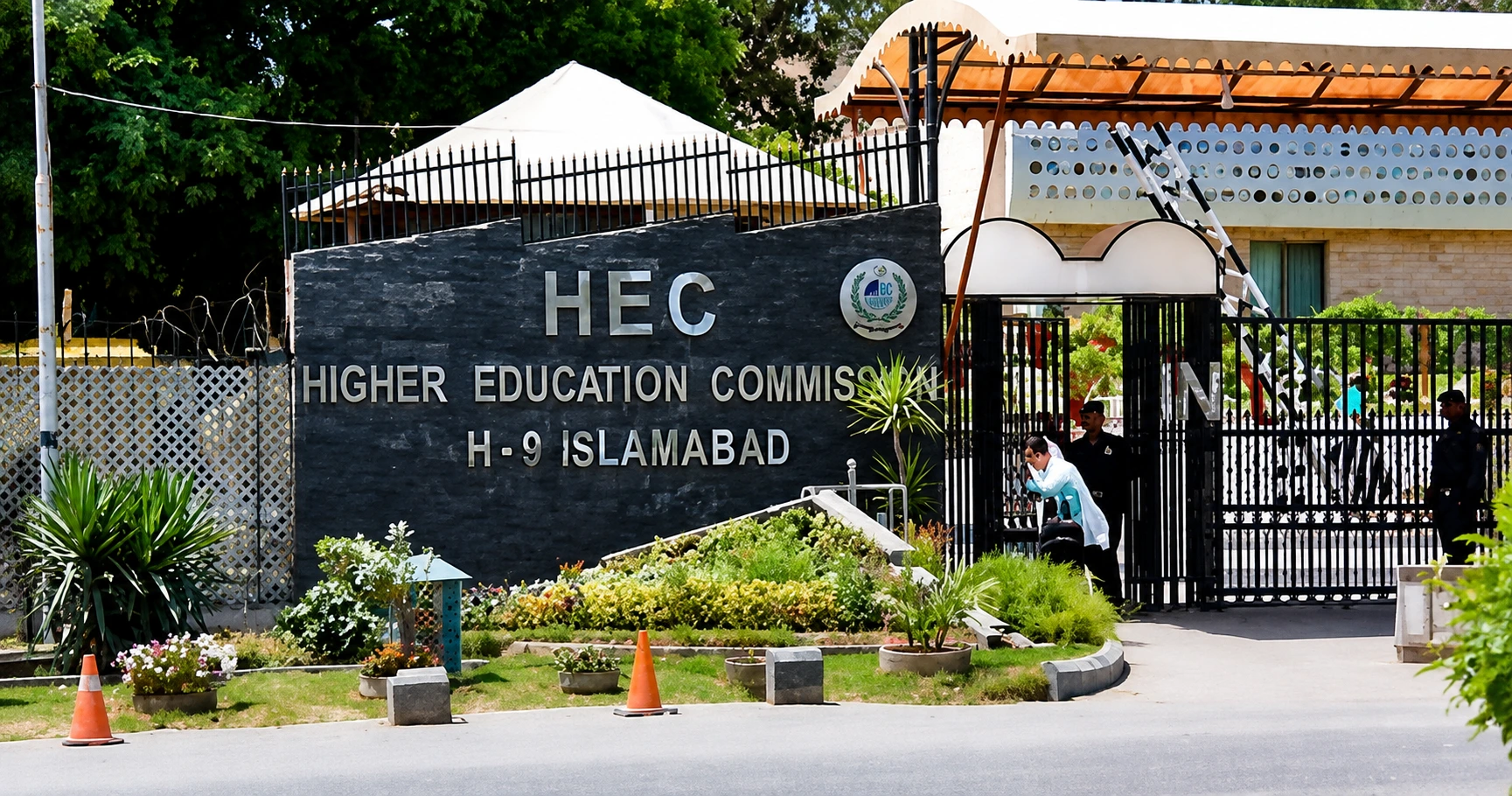
Good news for university teachers across Pakistan. The Higher Education Commission (HEC) has invited nominations for the Best University Teacher Award (BUTA) 2026. This is one of the most respected awards in the country’s education sector. It honours teachers who go beyond the classroom and truly shape young minds.
Every year, HEC runs this award to find the best faculty members in Pakistan. The process is simple, but it is also thorough. Universities send in names, and a panel checks each nomination carefully. This year’s cycle has now opened, and teachers, departments, and universities are getting ready to take part.
In this post, we break down what this award is, why it matters, and how the nomination process works. We keep the language easy so that even someone outside the education field can follow along.
What Is the HEC Best University Teacher Award?
The Best University Teacher Award, often called BUTA, was started by HEC back in 2003. The idea was simple from the start: reward teachers who make a real difference. Since then, it has become one of the top honours a university teacher in Pakistan can receive.
Over the years, the format has changed a bit. Since 2019, HEC has picked national-level winners across a set number of categories, rather than giving one award to every single university. This keeps the competition tight and the standard high.
Each national winner usually gets a cash prize of Rs. 1 million, along with a formal certificate. But for most teachers, the real reward is the recognition. Being named a BUTA winner tells the world that your teaching stands out.
Why This Award Matters
Teaching is not an easy job. A good teacher does more than deliver lectures. They guide students, mentor young researchers, and help shape the direction of their careers. HEC created this award to give such teachers the credit they deserve.
Chairman HEC, Prof. Dr. Niaz Ahmad Akhtar, has spoken about this in past ceremonies. He has said that the award recognises excellence in teaching, a strong commitment to student learning, and the effort teachers put in to prepare young people for future challenges. He has also encouraged faculty members to act as role models for their students, both in and outside the classroom.
This kind of recognition also pushes other teachers to improve. When someone from your own department or university wins, it becomes a simple reminder that hard work in teaching does get noticed.
Who Can Be Nominated?
The nomination process is not complicated. Here is a simple breakdown of how it usually works:
- Every public and private sector university in Pakistan can send nominations.
- Each university is expected to send at least two names for consideration.
- A selection committee is formed inside each university. This committee is headed by the Vice Chancellor or Head of the Institution.
- The committee also includes the Registrar, the Director of the Quality Enhancement Cell (QEC), and senior deans.
- This university-level committee reviews all nominations and picks a winner along with two runners-up.
- The winning nomination, along with all supporting documents, is then sent to HEC for the national-level competition.
So, in short, a teacher first needs to be nominated and approved at their own university before their name goes forward to HEC.
How Are Nominees Judged?
HEC does not choose winners at random. There is a proper evaluation framework in place. According to HEC’s own guidelines and past award cycles, nominations are judged on several factors, including:
- Feedback from students during course evaluations
- Innovative and modern teaching approaches
- Skill in designing course curriculum
- Supervision of postgraduate students and their research work
- Publication of research in high-impact journals
An independent review committee at HEC goes through each nomination using these points. This keeps the process fair and gives every qualified teacher a real chance, no matter which university they come from.
Categories Under the Award
In recent cycles, HEC has grouped nominations under different broad discipline categories. These usually cover areas such as:
- Engineering, Manufacturing and Construction
- Natural Sciences, Mathematics and Statistics
- Education
- Health and Welfare
- Business, Administration and Law
- Social Sciences, Journalism and Information
- Agriculture, Forestry, Fisheries and Veterinary Sciences
This grouping makes sure that teachers from very different fields, like medicine and social sciences, are not competing against each other on the exact same terms. It keeps the process balanced and fair for everyone involved.
What Universities Need to Do
For the 2026 cycle, universities are being asked to spread the word about this award to all their departments. This is an important step, because many talented teachers may not even know that such an award exists.
Once departments send names, the university committee needs to shortlist and finalise its nominees. All the required documents, including the nomination form and supporting certificates, need to be filled out correctly. HEC usually shares a nomination proforma and a detailed award framework on its official website, so universities have a clear and simple format to follow.
Universities that miss internal deadlines risk losing the chance to put their best teachers forward. This is why HEC always urges institutes to act early and not wait until the last moment.
A Look at the Previous Cycle
To understand how this award works in practice, it helps to look at the last completed cycle. In the BUTA 2025 cycle, seven faculty members were honoured by HEC at a ceremony held at the HEC Secretariat in Islamabad. Winners came from universities including COMSATS University Islamabad, UET Lahore, UMT Lahore, King Edward Medical University, and others. Each of them received a cash prize along with formal recognition from HEC.
This shows that the award genuinely reaches faculty members from all types of institutions, not just a handful of top-ranked universities. A teacher from a mid-sized institution has just as much of a simple, fair shot at winning as one from a large, well-known university, as long as their work is strong. Readers who want to check university rankings or academic benchmarks can also look at resources like Times Higher Education or the QS World University Rankings, which many Pakistani universities are increasingly part of.
Why Teachers Should Take This Seriously
For any university teacher, being nominated for BUTA is a big deal. It is not just about the cash prize. It puts your name and your work in front of one of the most respected education bodies in the country. For younger faculty members especially, this kind of recognition early in their career can open doors and build confidence.
Departments and universities also benefit. A BUTA winner brings positive attention to the whole institution. It becomes a simple selling point when the university talks about its faculty quality to future students and partners.
Final Word on the Process
The nomination window for BUTA 2026 is now open, and universities across Pakistan are expected to act quickly. Teachers who feel they meet the criteria should speak with their department heads and find out how their university plans to run its internal nomination process. For official updates, forms, and the latest deadline, faculty members and administrators can check the Higher Education Commission’s official website directly.
Frequently Asked Questions
Q1. What is the HEC Best University Teacher Award?
It is a national award started by HEC in 2003. It recognises university teachers in Pakistan for excellent teaching and academic work.
Q2. Who can nominate a teacher for this award?
Universities nominate teachers, not individuals directly. Each university sends names through its own internal selection committee.
Q3. What do winners of the award receive?
National-level winners usually get a cash prize of Rs. 1 million along with a formal certificate from HEC.
Q4. How are nominees evaluated by HEC?
HEC looks at student feedback, teaching methods, curriculum design skills, research supervision, and journal publications before choosing winners.