The Textile Industry in Pakistan is the backbone of the country’s manufacturing sector and one of the largest contributors to economic growth. It plays a crucial role in generating employment, earning foreign exchange through exports, and supporting millions of people across the cotton value chain. From cotton cultivation and yarn production to fabric manufacturing, garment stitching, and home textiles, the industry serves as a vital pillar of Pakistan’s economy.
Pakistan is among the world’s leading producers of cotton and has developed a well-integrated textile value chain. The country’s skilled workforce, competitive production costs, and expanding export markets have helped maintain its position in the global textile trade. However, the industry also faces challenges such as rising energy costs, fluctuating raw material prices, global competition, and the need for technological modernization.
This article provides a comprehensive overview of Pakistan’s textile sector, exploring its economic importance, key segments, challenges, export potential, government initiatives, and future growth opportunities.
Importance of the Textile Sector in Pakistan’s Economy
The textile sector contributes significantly to Pakistan’s industrial output and remains one of the country’s largest sources of export earnings.
Its importance extends beyond manufacturing because it supports multiple industries, including agriculture, logistics, retail, banking, transportation, and international trade.
Some of the major economic contributions include:
- Employment for millions of workers.
- Significant share of national exports.
- Support for cotton farming and related industries.
- Foreign exchange earnings.
- Industrial development.
- Small and medium enterprise (SME) growth.
- Investment opportunities.
- Rural and urban economic activity.
The sector’s performance has a direct impact on Pakistan’s economic stability and industrial growth.
Major Segments of the Textile Industry in Pakistan
The Textile Industry in Pakistan consists of several interconnected segments that transform raw cotton into finished products sold in domestic and international markets.
Cotton Production
Pakistan is one of the leading cotton-producing countries, supplying raw material for spinning mills and textile manufacturers.
Spinning Industry
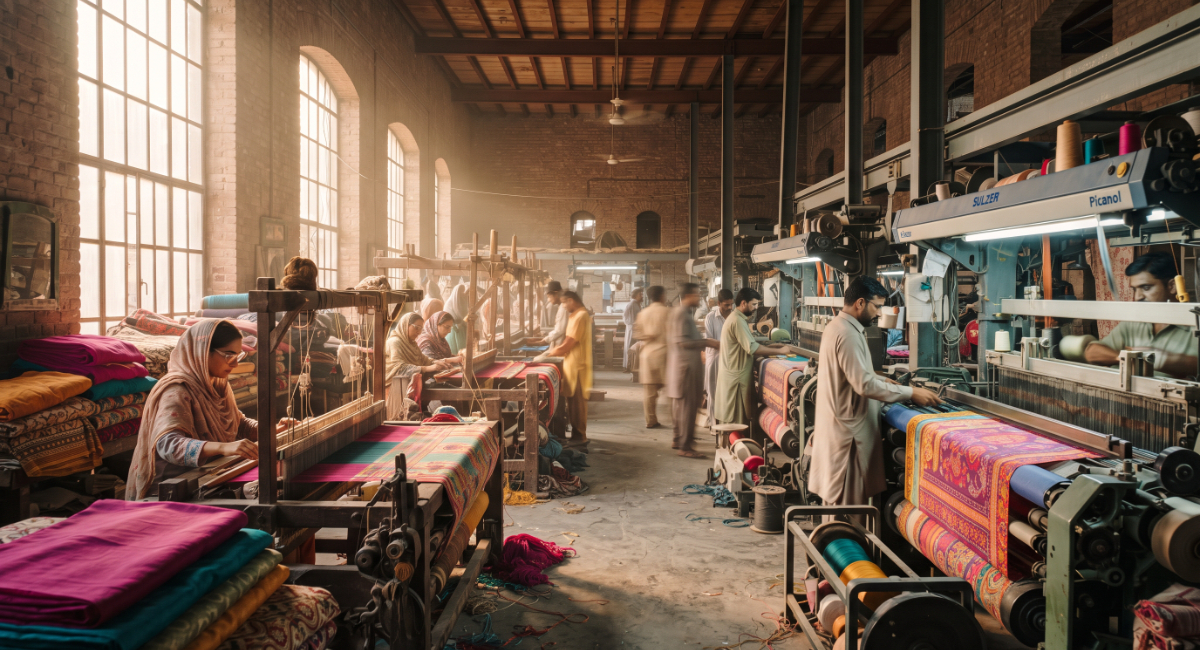
Spinning mills convert cotton into yarn, which forms the foundation of fabric production. Pakistan has one of the largest spinning capacities in Asia.
Weaving and Knitting
Yarn is processed into woven and knitted fabrics used in clothing, industrial textiles, and home furnishing products.
Garment Manufacturing
Ready-made garments represent one of Pakistan’s fastest-growing export categories. Products include fashion apparel, sportswear, denim, uniforms, and children’s clothing.
Home Textiles
Pakistan has built a strong reputation for exporting towels, bed linens, curtains, kitchen textiles, and other home furnishing products to international markets.
Pakistan’s Textile Exports and Global Market Presence
Textile exports remain the largest source of foreign exchange earnings for Pakistan.
Major export products include:
- Cotton yarn.
- Cotton fabric.
- Ready-made garments.
- Knitwear.
- Denim products.
- Towels.
- Bed sheets.
- Home textile products.
- Value-added apparel.
Pakistan exports textile products to numerous international markets, including North America, Europe, the Middle East, and Asia.
Growing demand for sustainable fabrics, high-quality apparel, and value-added textile products presents new opportunities for exporters to expand their global market share.
Challenges Facing the Textile Industry
Despite its strengths, the industry continues to face several structural and operational challenges.
Rising Energy Costs
Electricity and natural gas prices significantly affect production costs and reduce competitiveness in international markets.
Cotton Production Issues
Climate change, pest attacks, and fluctuating crop yields impact the availability of quality raw cotton.
Global Competition
Manufacturers compete with countries such as Bangladesh, Vietnam, China, India, and Turkey, where productivity and technology continue to improve.
Technological Modernization
Many factories require advanced machinery, automation, and digital manufacturing systems to improve efficiency and product quality.
Skilled Workforce Development
Continuous investment in technical education and vocational training is necessary to meet evolving global industry standards.
Addressing these challenges is essential for maintaining export competitiveness and long-term sustainability.
Government Support for the Textile Industry in Pakistan
The Textile Industry in Pakistan continues to benefit from various government initiatives aimed at increasing exports, encouraging investment, and improving industrial productivity.
Key support measures include:
Export Incentives
Policies encouraging exports help manufacturers compete more effectively in international markets.
Infrastructure Development
Improved transportation networks, industrial zones, and logistics facilities reduce supply chain costs.
Energy Reforms
Efforts to improve energy availability and reliability support uninterrupted industrial production.
Investment Promotion
Government policies encourage both domestic and foreign direct investment in textile manufacturing and value-added production.
Technology Upgradation
Modernization programs encourage factories to adopt automation, digital manufacturing, quality management systems, and environmentally sustainable production methods.
These initiatives aim to strengthen Pakistan’s position as a competitive global textile exporter.
Emerging Opportunities for Future Growth
The future of Pakistan’s textile sector depends on innovation, sustainability, and diversification.
Promising growth areas include:
- Technical textiles.
- Organic cotton production.
- Sustainable manufacturing.
- Recycled textile products.
- Smart fabrics.
- Digital textile printing.
- Artificial intelligence in manufacturing.
- Automation and robotics.
- E-commerce apparel exports.
- Fashion branding.
Global consumers increasingly value environmentally responsible manufacturing, ethical sourcing, and high-quality finished products.
Companies that invest in innovation and sustainability are better positioned to compete in international markets.
Why the Textile Industry Remains Pakistan’s Competitive Advantage
Several factors continue to make Pakistan an attractive destination for textile manufacturing and investment.
These include:
- Abundant cotton production.
- Competitive labor costs.
- Skilled workforce.
- Integrated textile value chain.
- Strong export experience.
- Strategic geographic location.
- Expanding industrial infrastructure.
- Growing investment opportunities.
By focusing on value-added manufacturing rather than exporting raw materials alone, Pakistan can increase export revenues while creating higher-paying employment opportunities.
Continued investment in research, technology, workforce development, and sustainable production practices will further strengthen the industry’s long-term competitiveness.
Conclusion
The Textile Industry in Pakistan remains one of the country’s most valuable economic assets, supporting exports, employment, industrial development, and foreign exchange earnings. Although the sector faces challenges such as rising production costs, global competition, and modernization requirements, its strong manufacturing base, skilled workforce, and integrated supply chain provide significant opportunities for future growth. By embracing innovation, improving productivity, investing in sustainable manufacturing, and expanding value-added exports, Pakistan can further strengthen its position in the global textile market while creating lasting economic benefits for businesses, workers, and the national economy.
Frequently Asked Questions (FAQs)
1. Why is the textile industry important to Pakistan?
The textile industry is Pakistan’s largest manufacturing sector and one of its biggest sources of exports, employment, and foreign exchange earnings.
2. What products does Pakistan export through its textile industry?
Major exports include cotton yarn, woven fabrics, knitwear, ready-made garments, denim, towels, bed linens, home textiles, and fashion apparel.
3. What challenges does Pakistan’s textile sector face?
The industry faces challenges such as high energy costs, fluctuating cotton production, global competition, outdated technology, supply chain issues, and the need for skilled labor.
4. Which countries import Pakistani textile products?
Pakistan exports textile products to markets across Europe, North America, Asia, the Middle East, and other international regions.
5. How can Pakistan improve its textile exports?
Investing in advanced manufacturing technologies, sustainable production, workforce development, branding, product diversification, and value-added exports can enhance global competitiveness.
6. What is the future of Pakistan’s textile industry?
The future is promising, particularly in technical textiles, sustainable manufacturing, smart fabrics, automation, digital production, and premium value-added apparel, provided continuous investment and policy support remain in place.