If you’ve ever followed Pakistani politics, you’ve probably come across the term chief minister of Punjab more times than you can count. It’s one of the most talked-about positions in the country, and honestly, that makes sense. Punjab isn’t just any province it’s the beating heart of Pakistan’s political, economic, and cultural life. So let’s break down who holds this office, what they actually do, and why it matters so much to millions of people.
What Does the Chief Minister of Punjab Actually Do?
At its core, the office is about running the day-to-day affairs of the province. The person elected to this role is the head of government for Punjab, working alongside a cabinet of ministers to manage everything from healthcare and education to law enforcement and infrastructure. While the governor holds a mostly ceremonial position, the real executive authority rests with this elected leader and their team.
The role is filled through a vote in the Provincial Assembly, where the candidate needs a simple majority to take charge. There’s no fixed term limit either as long as the assembly’s confidence remains intact, the leader can continue serving. This setup gives the office a lot of staying power, but it also means political alliances and assembly dynamics play a huge role in how long someone stays in the seat.
Why This Office Holds So Much Political Weight
Here’s something a lot of people don’t realize: Punjab controls 141 seats in the National Assembly out of 272 total, plus another 32 reserved seats. That’s a massive chunk of federal representation. Whoever controls Punjab’s provincial government often has a direct line of influence on national politics too. It’s not an exaggeration to say that several of Pakistan’s prime ministers first cut their teeth as provincial leaders in Lahore before moving to the national stage.
With over 127 million residents calling Punjab home, the province is also the country’s most populous region. That population size brings both opportunity and pressure more resources to manage, more public expectations, and more scrutiny from the media and opposition parties alike.
Meet the Current Chief Minister of Punjab
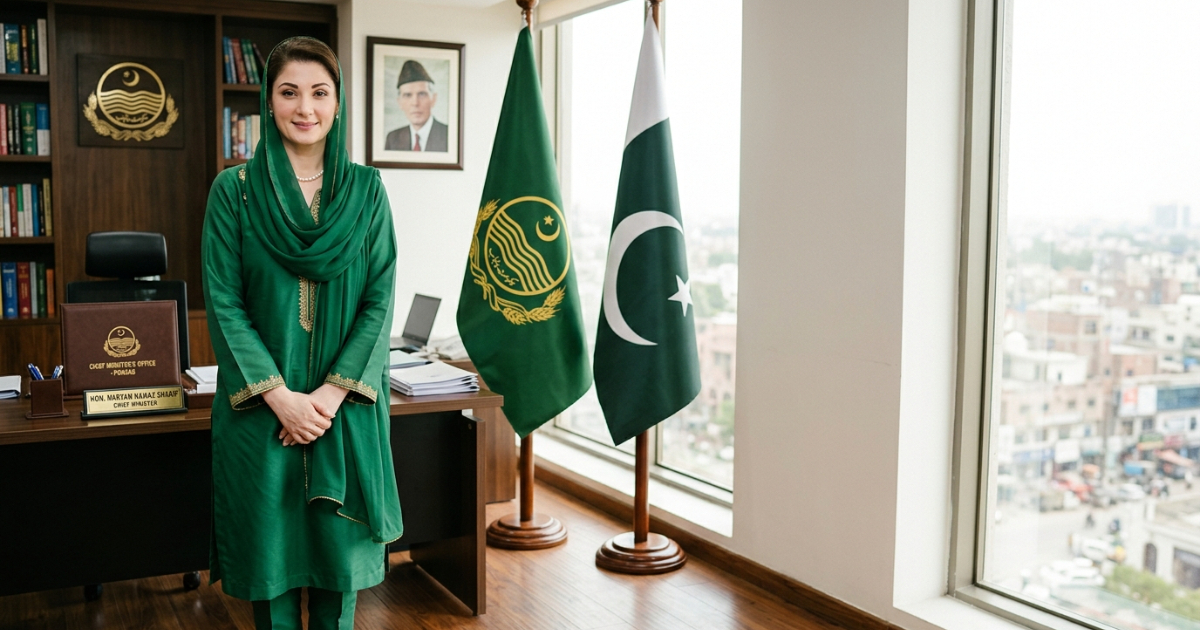
As of 2026, the chief minister of Punjab is Maryam Nawaz Sharif, who made history in February 2024 by becoming the first woman ever elected to this position in Pakistan. She’s the daughter of former prime minister Nawaz Sharif and represents the Pakistan Muslim League-Nawaz (PML-N). Her election with an overwhelming majority of votes in the Provincial Assembly marked a genuinely historic moment, not just for Punjab but for women in Pakistani politics more broadly.
Born in Lahore in 1973, she studied at institutions across the city before eventually stepping into public life. Her political journey began quietly in the background, helping run election campaigns and social media strategy, before she took on more visible leadership roles that eventually led to the CM’s office.
A Quick Look at the History of the Office
The position itself dates back to the very founding of Pakistan. Punjab operated under the name West Punjab from 1947 until 1955, and the office of chief minister has evolved considerably since then through periods of military rule, caretaker governments, and civilian administrations. Over nearly eight decades, Punjab has seen more than two dozen individuals hold this seat, some for brief caretaker stints and others for years at a stretch.
Here’s a snapshot table covering some of the more notable holders of the office over recent history:
| Chief Minister | Party/Type | Tenure |
| Shahbaz Sharif | PML-N | Longest-serving CM, multiple terms |
| Usman Buzdar | PTI | 2018 – 2022 |
| Hamza Shahbaz | PML-N | April 2022 |
| Chaudhry Parvez Elahi | PML-Q | July 2022 – Jan 2023 |
| Mohsin Naqvi | Caretaker | Jan 2023 – Feb 2024 |
| Maryam Nawaz Sharif | PML-N | Feb 2024 – Present |
Core Responsibilities That Shape Daily Governance
The chief minister of Punjab wears many hats, and the workload is genuinely demanding. Some of the biggest responsibilities include:
- Overseeing provincial budget allocation and financial planning
- Appointing and supervising cabinet ministers and bureaucrats
- Managing law and order through the provincial police force
- Driving infrastructure projects like roads, transit systems, and public housing
- Leading education and healthcare policy reforms
- Representing Punjab’s interests in dealings with the federal government
Balancing all of this while keeping the assembly’s support intact is no small feat, and it’s why the office often becomes a proving ground for future national leaders.
Development Work and Public Welfare Initiatives
Punjab’s leadership has historically been judged on visible, tangible projects. Think large-scale transit systems like the Lahore Metro Bus and Orange Line Train, both completed under previous administrations. These weren’t just infrastructure wins they became symbols of governance effectiveness that shaped public opinion for years afterward.
More recent efforts have leaned toward digital governance, youth programs, women’s empowerment schemes, and agricultural support, since farming remains a backbone of Punjab’s economy. Public welfare initiatives touching health cards, free education support, and social safety nets also tend to dominate the policy agenda of whoever sits in this seat.
Challenges That Come With the Territory
Running a province this large isn’t without its headaches. Frequent leadership changes, coalition politics, and judicial interventions have all disrupted governance at various points in Punjab’s history. Add to that the pressure of managing law enforcement in a province with serious crime and security concerns, and it becomes clear why this job is often described as one of the toughest in Pakistani politics.
Economic pressures, inflation, and the constant balancing act between provincial autonomy and federal directives also test every administration that takes office here.
Why Punjab’s Leadership Shapes the Whole Country
Because of its sheer size and political clout, decisions made in Lahore ripple outward across the entire nation. Federal coalitions are often built or broken based on which party controls Punjab. This is part of why national media coverage of the province’s leadership tends to be so intense compared to other provinces.
Conclusion
At the end of the day, the chief minister of Punjab isn’t just a regional title it’s one of the most influential political roles in Pakistan. From shaping infrastructure and public welfare to influencing national coalitions, the person holding this office carries enormous responsibility on their shoulders. Whether you’re a student researching Pakistani governance, a voter trying to stay informed, or just someone curious about how the country’s largest province is run, understanding this role gives you real insight into how power actually flows in Pakistan. Keep an eye on developments here, because what happens in Punjab rarely stays contained to Punjab alone.
Frequently Asked Questions
Who is the current chief minister of Punjab?
Maryam Nawaz Sharif has held the position since February 2024, making her the first woman to serve as CM of any province in Pakistan.
How is the chief minister of Punjab elected?
They’re elected by a majority vote within the Provincial Assembly of Punjab, not through a direct public vote for the office itself.
Is there a term limit for the position?
No, there’s no set term limit. The chief minister can continue serving as long as they maintain the confidence of the assembly.
Where is the Chief Minister’s Secretariat located?
It’s based in Lahore, which also serves as the capital of Punjab province.
Who was the longest-serving chief minister of Punjab?
Shahbaz Sharif holds that distinction, having led major infrastructure projects across multiple terms in office.