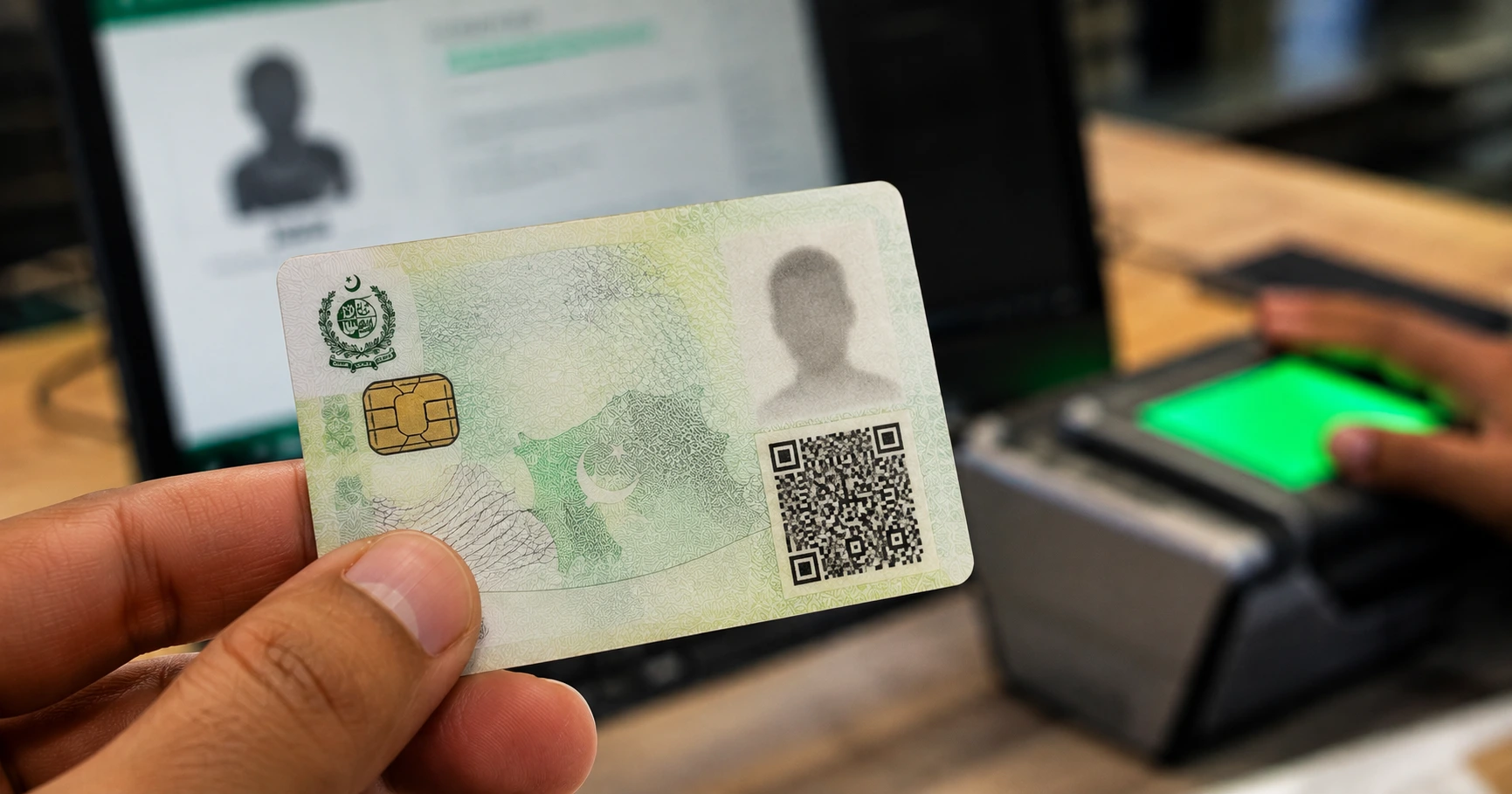
Your national ID card is changing. From August 14, 2026, Pakistan’s identity authority started giving out a brand-new card. It has no microchip. Instead, it carries a QR code. This one small change is a big deal for millions of Pakistanis.
What Just Happened
The National Database and Registration Authority (NADRA) launched the new card on Independence Day, August 14, 2026. The launch date was picked on purpose. Officials called it a step toward self-reliance.
For 14 years, Pakistan’s smart ID cards used an imported microchip. That chip held personal data. But there was a problem. Most shops, banks, and offices never bought chip readers. So the chip sat unused on most cards. People carried a “smart” card that nobody could actually scan.
NADRA has now fixed that gap. The new card uses a QR code instead of a chip. A QR code is that black-and-white square pattern you already see on menus, tickets, and payment apps. Almost every phone can read one. No special reader is needed. This makes the whole system easy for regular people and businesses alike.
Who Made the New Card
The federal government approved the new design on February 23, 2026. The card itself is made inside Pakistan. The National Security Printing Company (NSPC), based in Karachi, manufactures it. The material is polycarbonate, a tough plastic used for secure ID cards around the world.
Before this, the microchip inside old cards came from foreign suppliers. That meant Pakistan depended on other countries for a key part of its ID system. The new QR card removes that chip entirely. NADRA says this cuts costs and reduces reliance on imports. It is also a simple way to make local manufacturing stronger.
How the QR Code Works
The QR code on the new card is not just a random pattern. It is secured and linked to NADRA’s database. Anyone checking the card can scan the code using a smartphone. They need an official app called PakIdentity, or PakID, made by NADRA.
Once scanned, the app shows the cardholder’s basic details and photograph. This lets banks, hospitals, telecom companies, and other offices confirm someone’s identity in seconds. Verification becomes fast and simple, without any physical hardware.
NADRA also plans to give special scanning software to organisations that check IDs often. This list includes banks, telecom operators, hospitals, Pakistan Railways, and law enforcement agencies. These groups will get direct access to a system built for quick checks.
What’s on the Card
The new card is not just about the QR code. It also carries updated printed details. Here is a simple table showing what appears on it:
| Feature | Details |
|---|---|
| Verification method | Secure QR code (no chip) |
| Material | Polycarbonate |
| Manufacturer | National Security Printing Company, Karachi |
| Languages printed | Urdu and English |
| Family number | Displayed on the card |
| Special symbols | For persons with disabilities, senior citizens, organ donors, and citizens of Azad Jammu and Kashmir |
| Verification app | PakIdentity (PakID) |
NADRA says the card also carries updated visible and hidden security features. These are designed to stop fake copies and keep the card safe from misuse.
Why NADRA Made the Switch
The reasoning behind this change is fairly simple. Chip readers never became common across Pakistan. Shops, small offices, and even some government counters simply did not have them. So the chip on old cards mostly went to waste.
A QR code fixes that problem right away. Every basic smartphone camera can scan it. There is no need to buy costly reader machines. This makes identity checks far more accessible for small businesses, not just big banks or telecom firms.
There is also a data-entry benefit. When an office scans the QR code, the person’s name, address, and other details load automatically into their system. Staff do not need to type this information by hand. This cuts down human error and saves time. It is a small but useful upgrade for everyday paperwork.
When You Will Get the New Card
The rollout is happening in stages, not all at once. Here is a quick table showing the timeline:
| Phase | Date | What Changes |
|---|---|---|
| Phase 1 | August 14, 2026 | New QR card replaces the standard chipless CNIC |
| Phase 2 | January 2027 | QR system extends to NICOP and Juvenile Cards |
| Final phase | To be announced | Pakistan Origin Card (POC) also moves to QR format |
If you already hold a valid ID card, there is no need to panic. NADRA has made this point clear. Every ID card issued earlier stays valid until its printed expiry date. You do not have to rush to a NADRA office just because of this news. Your current card will keep working normally until it expires on its own.
What This Means for the Average Citizen
For most people, daily life will not change much right away. You will only notice the difference when your current card expires and you apply for a fresh one. At that point, you will receive the new QR-based card automatically, without any extra request or fee difference for the format itself.
Businesses and government offices may feel the change sooner. As more organisations install QR-scanning software, identity checks at banks, hospitals, and telecom counters should become quicker. Long queues caused by manual form-filling may reduce over time, since scanning is meant to be a simple, one-step process.
You can read more about NADRA’s services on its official website or check identity verification details through the PakID app page once available. Independent identity technology coverage of this rollout is also available on Biometric Update.
Frequently Asked Questions
1. Do I need to replace my current ID card right away?
No. Your existing card stays valid until its printed expiry date.
2. What app do I need to scan the new QR code?
You need NADRA’s PakIdentity (PakID) mobile app to scan and verify the card.
3. Will the new card cost more than the old one?
NADRA has not announced any change in the standard card fee for this format switch.
4. When will overseas Pakistanis get the new NICOP card?
The QR system is expected to extend to NICOP and Juvenile Cards from January 2027.