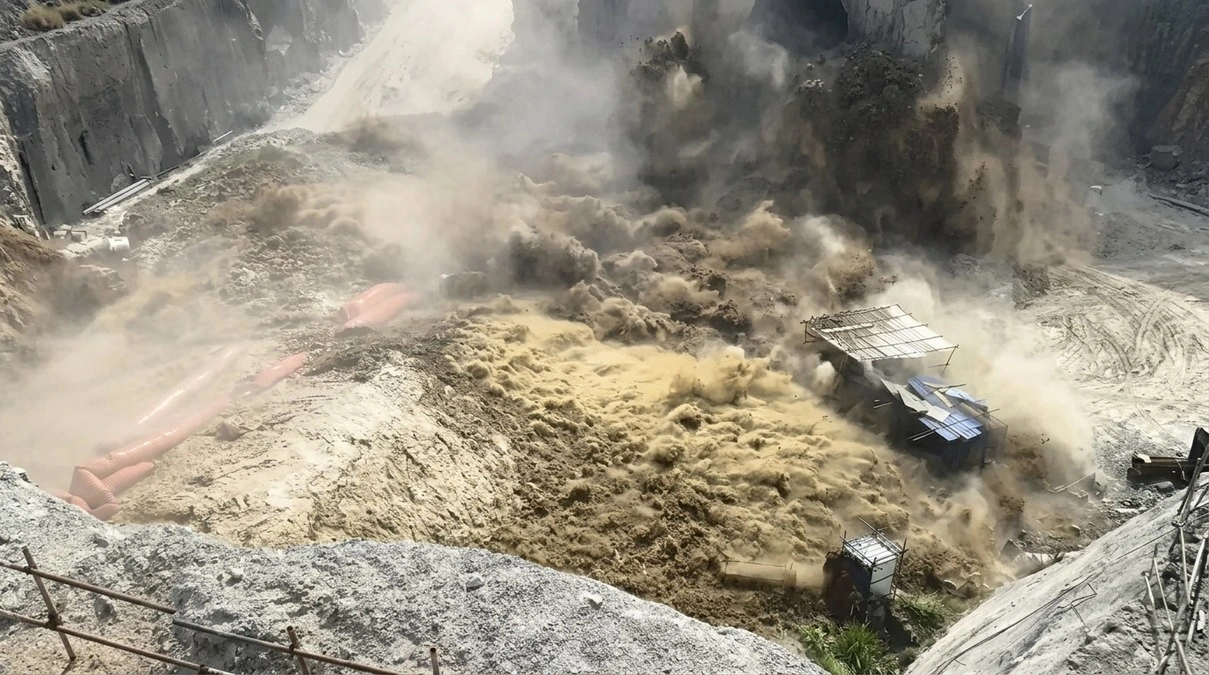
On Monday, 9 November 2026, a rock mass came down at a construction site of the Tarbela Dam in Pakistan. Water rushed into nearby work areas right after. Let’s start with the good news: nobody died, and every worker got out safely.
I’ll walk you through the story in easy words. You’ll see what happened, what officials have said so far, and what it could mean for families living close to the Indus River. I’ve kept the language simple, because news like this should be clear to everyone.
What Happened at Tarbela Dam?
The trouble started at the Tarbela Dam 5th Extension Project, which most people just call T-5. It’s a big construction job at one of the most famous dam sites in Pakistan.
Workers were digging a tunnel at the time. It’s known as the 2nd Bench Connecting Tunnel. During the digging, a weak patch of rock gave way. That opened a path for water from a nearby spot called the Intake Pit. The water flowed into the tunnel and into the power house area, which is still being built.
Here’s a simple way to picture it. Think of a bucket of water with a small crack in the side. The water doesn’t stay put for long. It finds the crack and pushes through.
An emergency was declared straight away. Work stopped, and the workers were told to move to safer areas.
No Loss of Life Reported
This is the part that matters most. According to the Water and Power Development Authority, better known as Wapda, every worker was taken out safely. No one was hurt, and no lives were lost.
Tunnels and power house sites can be dangerous places, so that’s a real relief. The quick response clearly made a difference. Worker safety at the site has also been part of recent World Bank review visits, which looked at health and safety measures on the project. Buildings can be repaired and machines can be replaced, but people can’t be. The simple fact is that everyone made it out.
What Wapda Has Said
Wapda put out a statement soon after the incident. It said the collapse happened while the 2nd Bench Connecting Tunnel was being dug, and that water from the Intake Pit then entered the tunnel and the power house area. It also said all workers were evacuated safely.
There was some good news on the water as well. Wapda says the Intake Pit has been completely drained, and no more water is reaching the downstream work sites. Pumping has also begun at the power house under construction. In plain words, the extra water is now being taken out.
The authority also spoke about rumours that were going around. Some reports claimed the T-5 tunnel had collapsed. Wapda said that isn’t true. It said the main tunnel, the power house under construction, the tailrace culvert and the switchyard were not damaged. So the simple message from Wapda is that the rock collapse was serious, but the main structures are fine.
Is There Any Damage?
Nobody can say for sure yet. Haripur Deputy Commissioner Waseem Ahmed said officials are still checking whether the tunnel, the power house and other structures in the working area have been affected. He was passing on what officials of the T-5 project had told him.
Senior Wapda officers, the project engineer and the contractor are also looking over the site. They want to understand what went wrong and how to handle any problems that follow.
So the full picture isn’t ready. Early statements sound reassuring, but the checks are still going on. It’s an easy thing to forget in the rush of headlines, but first reports are often incomplete. More details should come once the review is done.
Is There a Flood Risk?
This is probably the first question on the minds of people living near the river. It’s easy to understand why. Any Tarbela Dam news makes people nervous, and that’s natural.
A senior district administration official said there’s no threat of flooding in the areas downstream of Tarbela at present.
There is one thing people should know, though. Swabi Deputy Commissioner Nasarullah Khan said extra water has been released from the dam for what he called “unavoidable” reasons. He said this is expected to raise the flow and the level of water in the Indus River. So the river may look and behave differently over the next few days.
Safety Advice for the Public
Because the water may rise, the administration has asked people to be careful. The advice is simple, and it’s easy to follow. Please don’t bathe, swim or go boating in the Indus River for now. Keep your family safe and follow the public safety notices.
Rumours can spread fast, especially on social media, and they make people panic. The deputy commissioner asked citizens not to pay attention to them, and to check the district administration’s official page for correct information.
If you live near the riverbank, keep children and animals well away from the water. A river can look calm and still be moving fast. A few small steps now can prevent a lot of heartbreak later.
A Look Back: The Earlier Cofferdam Collapse
This isn’t the first time the T-5 project has run into trouble. Earlier, a cofferdam collapsed at the same project. A cofferdam is a temporary barrier that builders use to keep water out of a work area while they build.
In July, a committee formed by the government looked into that collapse. It held three parties responsible: the contractor, the consultant and the employer, which is Wapda. One of the main reasons it gave was design changes made after the contract was signed, without proper approval.
That earlier collapse hit the project hard. It caused a delay of at least two years. Costs went up by more than 285 per cent, jumping from Rs82 billion to Rs317 billion. Before Monday’s incident, the plan was to finish the project by the end of June 2028, instead of 2026.
Officials haven’t said whether Monday’s collapse will add more delay. For now, that question is still open.
Why the T-5 Project Matters
The Tarbela 5th Extension Project will add 1,530 megawatts of power. At the moment, the dam’s installed capacity is 4,888 megawatts. Once the new project is done, it will go up to 6,418 megawatts.
You don’t need to be an engineer to see why that matters. Pakistan needs more electricity, and this project is meant to help with that.
A lot of money is tied to it too. The World Bank is providing $390 million, and the Asian Infrastructure Investment Bank is providing $300 million. The World Bank also approved an extra $300 million in June 2026 to help cover cost overruns, and a later World Bank review described progress on the wider Tarbela project as satisfactory. With that much money and that many hopes on the line, any problem at the site gets close attention, and the Pakistan Tarbela Dam project is no exception.
What Should We Watch Next?
A few things will tell us more in the coming days. First, the damage reports. Officials still have to confirm whether the tunnel, the power house and other structures are affected. Second, the pumping work at the power house, which is still going on.
Third, keep an eye on the river. The extra water released from the dam may raise the flow in the Indus. Fourth, watch for updates from Wapda and the district administration, who are expected to share more.
And finally, the timeline. People will want to know if the 2028 target can still be met.
Final Words
This was a rock collapse at a construction site, not a failure of the main dam. Water got into the tunnel and the power house area, but the Intake Pit has been drained and pumping is under way. Most important of all, every worker got out safely.
Wapda says the main tunnel, the power house, the tailrace culvert and the switchyard weren’t damaged, and officials say there’s no flood threat downstream for now. Still, the river may rise, so please stay away from the water and rely on official sources.
If you’re following the Pakistan Tarbela Dam collapse story, the simple takeaway is this: stay calm, stay careful, and wait for confirmed updates.