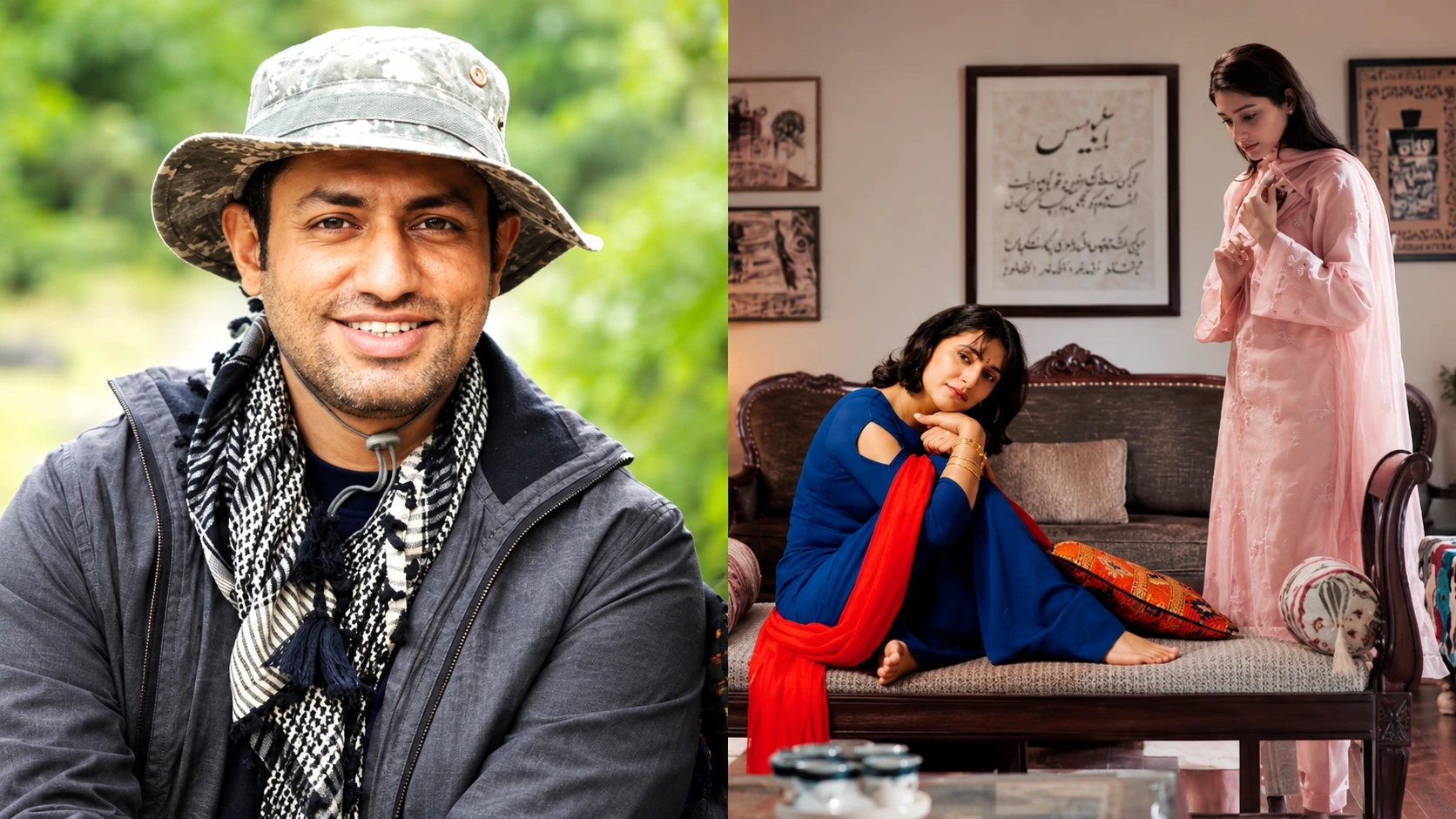
A poem on a wall has kept Pakistani drama lovers busy for days. Fans of Dar e Nijaat paused, zoomed in and argued about it online. Now the director has explained it. The answer is simple, and it has made many viewers want to watch the scene again.
What happened in the final episode
Dar e Nijaat is one of the biggest hits on Pakistani television at the moment. Many viewers say its fame has spread well beyond Pakistan. People love the story, the performances and the care in every scene.
The drama is written by Umera Ahmed and directed by saqib khan. Both are being praised, and fans often say the show stands out for its attention to detail.
That detail is what started this latest talking point. In the last scene of the final episode, a poem was visible on the wall of Khushbakht’s living area. It was Iblees by Allama Mohammad Iqbal.
Sharp eyed viewers spotted it quickly. Screenshots and short clips spread across Facebook and Instagram. Many asked the same question. Was it just part of the set, or did it carry a meaning?
Why viewers could not ignore it
A poem on a wall can look like a simple prop. In many dramas, nobody would notice it. But Dar e Nijaat has trained its audience to look closely, because small things in the show often carry weight.
The timing also mattered. The poem appeared at the very end, when feelings were already strong. Viewers wanted to know if the choice was planned. Fans started offering their own readings, and some tried to link the poem to the journey of the lead characters.
This kind of online decoding is common when a drama leaves room for thought. It is also a sign of how much people care about the show.
What saqib khan said
The director chose to reply. saqib khan shared a post on Facebook to speak to the fans directly. He thanked the viewers who understood the nuance in that scene. He said he was glad that people noticed it.
He then explained the idea behind the poem. According to him, Allama Iqbal’s Iblees reflects the journey of both Khushbakht and Zaryab. So the poem was not placed on the wall by chance. It was linked to the paths of the two main characters.
His reply was short and warm. It was also easy to follow. He did not talk down to anyone, and he gave fans the credit for noticing.
Credit to his teacher Rahat Kazmi
One part of his message touched many people. The director gave credit to his teacher, the veteran Rahat Kazmi. He said his teacher taught him why details matter in storytelling.
Pakistani audiences have always respected teachers and elders in the industry. So this part of the post felt sincere. It also helped explain why a small prop looked so carefully chosen.
Here is a quick summary of the key facts.
| Detail | What is known |
|---|---|
| Drama | Dar e Nijaat |
| Director | Saqib Khan |
| Writer | Umera Ahmed |
| Viral moment | Wall poem in the last scene of the final episode |
| Poem | Iblees by Allama Mohammad Iqbal |
| Where it appeared | Wall of Khushbakht’s living area |
| Director’s explanation | The poem reflects the journey of Khushbakht and Zaryab |
| Teacher he thanked | Rahat Kazmi |
How fans and celebrities responded
The reaction was warm. Many fans said they had also stopped at that exact scene. Some said they felt proud for spotting the clue early.
Others praised the director for his careful work. One viewer called his attention to detail magnificent. Many people shared their own breakdowns of the scene and the poem.
Actress Sanam Saeed also reacted. She called the explanation brilliant. She said she would ask Ali Kazmi to share it with his father, Rahat Kazmi. It was a small gesture, but it made the whole story feel personal.
Why this moment matters for Pakistani dramas
Pakistani dramas are often discussed for their stars, their songs and their big twists. This story shows another side. Quiet choices can also create a lot of buzz.
A single poem on a wall costs very little. Yet it gave viewers something to talk about at home, in family chats and on social media. That is a good reminder that careful craft still matters in television.
It also shows how close Allama Iqbal is to Pakistani hearts. His poetry is part of school life, public speeches and family conversations. When his words appear on screen, people notice.
Readers who want to learn more about the national poet can visit Allama Iqbal’s official website, run by Iqbal Academy Pakistan. It is a simple way to read about his life, thought and writings.
The timing is also interesting. According to Associated Press of Pakistan, the federal minister for national heritage and culture inaugurated year long national and international celebrations for Allama Iqbal’s 150th birth anniversary at his mausoleum in Lahore. So the national poet is already in the public conversation this month. The viral scene only added to it.
What viewers can take from this
The lesson is simple. Good storytelling often lives in small things. A prop, a line or a wall can say more than a long speech.
For people who have not watched Dar e Nijaat yet, it is a good reason to watch slowly. The director has now confirmed that at least one detail was planned with care.
For those who have already finished the drama, the poem may change how they remember the ending. Going back to that last scene is easy. Thinking about what the poem says about each character is the deeper and more rewarding part.
Viewers who want to read Iqbal’s poetry in full can also browse the Iqbal Cyber Library, the online library of Iqbal Academy Pakistan. It is an easy place to explore his books and related material.
What is still not clear
It is fair to be honest about the limits of what we know. The director has said the poem reflects the journey of Khushbakht and Zaryab. He has not given a full line by line breakdown in the post that has been reported.
Fans are free to read more into the poem. But those readings are personal views. They are not official statements from the team.
There is also no word on whether the makers will share more behind the scenes details. If they do, saqib khan may add more context. For now, his explanation has been easy enough to settle the debate for most viewers.
Final thoughts
The poem on the wall began as a small detail. It became a big topic because viewers cared enough to look closely. The director’s reply was kind, clear and full of respect for his teacher.
It also reminded the audience that Allama Iqbal’s poetry still moves people today. Whether you follow Pakistani television every night or only now and then, this story shows how one thoughtful choice can bring viewers together.