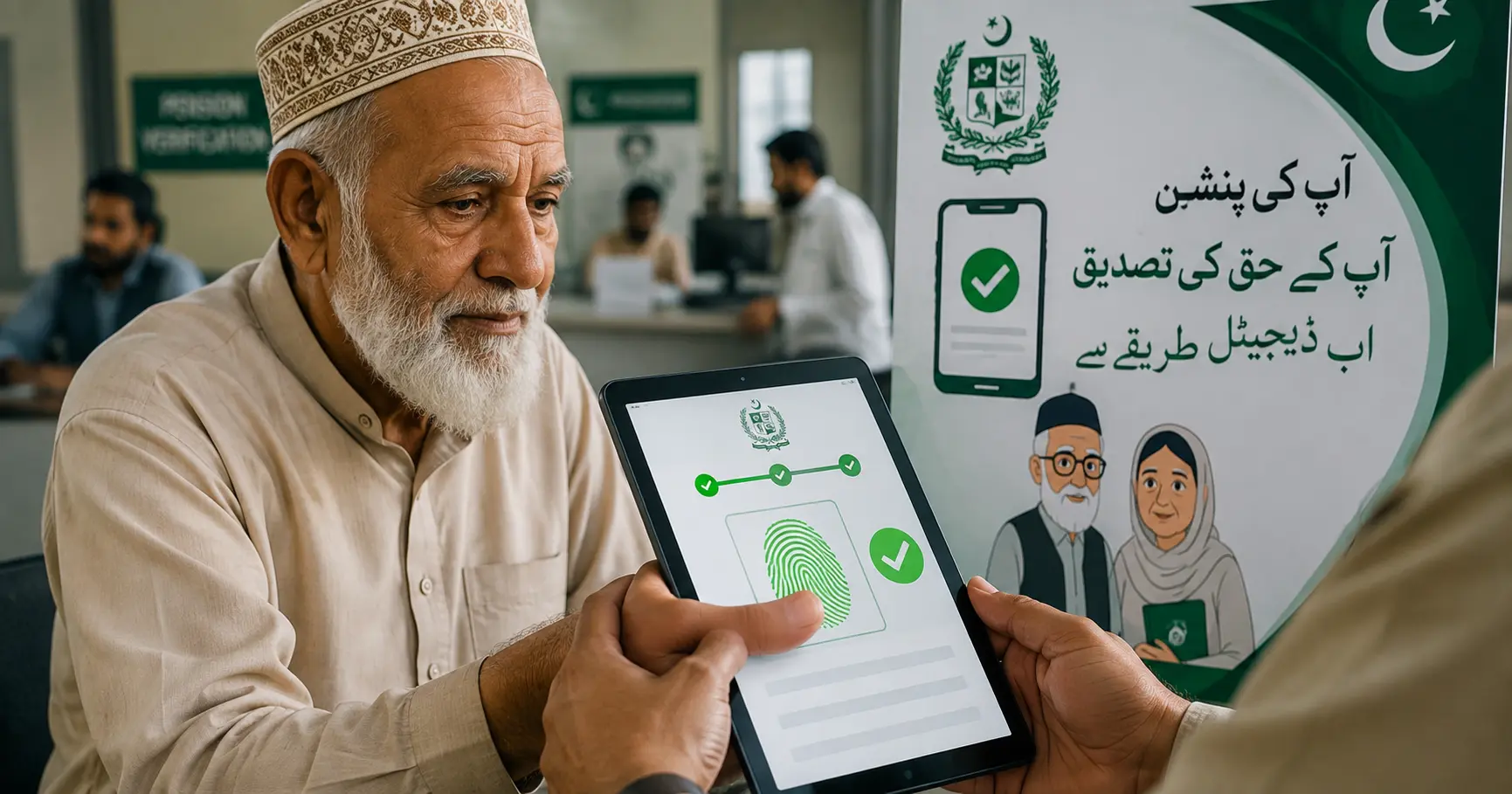
Good news for millions of pensioners in Pakistan. The government has started a new digital system for pension verification. Now, pensioners do not need to visit a bank every few months. They can prove they are alive from their own home. This is a big and simple change for old and disabled people across the country.
What Happened
On August 20, 2026, Prime Minister Shehbaz Sharif launched a new “Proof of Life” system in Islamabad. This system lets pensioners confirm their identity without going to a bank branch. The old process was hard for many people. Every six months, pensioners had to visit a bank in person. They had to give their fingerprints to prove they were still alive. For elderly people, this was not easy. Many of them find it hard to travel. Some have health problems. Some live in far-off villages with no bank nearby.
The Prime Minister said this new system will help civilian and military pensioners. It will also help elderly citizens, women, and persons with disabilities. He called it a service for the people. He also praised the National Database and Registration Authority, known as NADRA, for building a system that is easy for common people to use.
Why the Old System Was a Problem
Pakistan pays pensions to more than 1.7 million retired workers. This includes people who worked for the government, the army, and other public departments. Under the old rules, every pensioner had to prove they were alive twice a year. This is called a “proof of life” check. Most people did this by giving their fingerprints at a bank counter.
But this method had a big flaw. Many older pensioners have worn-out fingerprints. This happens naturally with age. Because of this, the biometric machines often failed to read their prints. When this happened, banks sometimes stopped their pension payments. This caused stress for people who depend on this money for daily needs.
Finance Minister Muhammad Aurangzeb spoke about this issue at the launch event. He said the Prime Minister had asked the ministries to find a fix for this fingerprint problem. He also said banks will now be told clearly. Pension payments should not stop just because a fingerprint does not match. This is a simple but important instruction that protects pensioners.
How the New Digital System Works
The new system uses NADRA’s Pak ID mobile application. This app already helps citizens access many government services. Now, it also allows pension verification. Pensioners can open the app on their phone and complete a face scan. This uses facial recognition technology to check the person’s identity. It works like unlocking a phone with your face, only this time it confirms a person’s pension record.
Once the face scan is done, the data goes to NADRA’s system. Banks then check this information using their link with NADRA. After this check is complete, the bank continues to release pension payments as usual. The whole process can be done from home, on a normal smartphone. There is no need to travel or stand in a queue.
For people who find mobile apps difficult, there are still other support options. NADRA’s e-Sahulat service points are also being connected to this system. This gives pensioners more than one simple way to complete their verification, depending on what suits them best.
A Bigger Digital Push
This launch is part of a larger plan by the government. Officials want to move many public services online. The goal is to make government work more transparent and reduce paperwork. You can read more about NADRA’s digital services on the official NADRA website, where citizens can also check other online facilities.
The State Bank of Pakistan has already told commercial banks to link their systems with NADRA. This connection is needed so that pension checks can happen digitally and safely. More details on this banking directive are available through the State Bank of Pakistan’s official portal.
Officials say the pension bill is a large part of the national budget. Making the verification process digital is also expected to reduce fraud. In the past, some pension payments continued even after a pensioner had passed away, simply because no one updated the record in time. A faster, tech-based check can catch such cases sooner. You can find general updates on government digital initiatives through Radio Pakistan’s national news section.
What This Means for Pensioners
For an average pensioner, this update is a simple win. It saves time. It saves travel costs. It removes stress about failed fingerprint scans. Elderly people, women, and persons with disabilities are expected to benefit the most, since they often found the old system hardest to follow.
The government has also promised a proper support system. If someone faces a technical problem during verification, there will be a way to raise a complaint and get help. This is meant to make sure no one loses their pension just because of a technical glitch.
This shift shows a wider trend in Pakistan. More government services are becoming easy to access through mobile apps. Pension verification joins a growing list of tasks, like ID card renewal and other NADRA services, that citizens can now handle from their phones.
Frequently Asked Questions
1. What is Pakistan’s new digital pension verification system?
It is a system that lets pensioners confirm they are alive using facial recognition on the Pak ID app. It replaces the old bank-visit and fingerprint method.
2. Who launched this system and when?
Prime Minister Shehbaz Sharif launched it in Islamabad on August 20, 2026, along with Finance Minister Muhammad Aurangzeb.
3. Do pensioners still need to visit a bank?
No, pensioners can now complete proof-of-life verification from home using their smartphone, though bank and e-Sahulat options remain available too.
4. What happens if a pensioner’s fingerprint or face scan fails?
Banks have been told not to stop pension payments due to failed biometric checks, and a grievance system is being set up to help affected pensioners.